
A growing number of American founders and investors are moving from the US to Dubai, trading familiar tech hubs for a tax-free city built around business and comfort. This is not an escape into the wilderness. It is a calculated step toward a place where your company, your wealth, and your lifestyle can all breathe a little easier.
Borderless Business: Making Sense of Dubai’s Free Zones
For entrepreneurs and investors, the biggest pull of the UAE is not the year-round sunshine. It is the economic freedom. If you are used to the tax burden and paperwork of California or New York, Dubai’s business climate feels genuinely different. Much of that comes down to the city’s famous Free Zones.
What a Free Zone Actually Gives You
Free Zones are special economic areas built to attract foreign investment. They run under their own rules, separate from the mainland UAE, and the benefits for expat business owners are hard to ignore.
- 100% foreign ownership. You do not need a local sponsor to own your company, so you keep full control.
- Zero personal income tax. What you earn stays with you.
- Favorable corporate tax. The UAE brought in a modest 9% corporate tax, but many Free Zone companies doing international business still qualify for 0%, depending on their activity.
- Full capital repatriation. You can move 100% of your capital and profits back home or offshore without friction.
A Zone Built for Your Industry
Dubai did not stop at one generic business hub. It created specialized zones for specific industries, so you land among people who do what you do.
- DMCC (Dubai Multi Commodities Centre). A natural home for crypto founders, traders, and e-commerce leaders.
- DIFC (Dubai International Financial Centre). The go-to for hedge fund managers, fintech startups, and wealth management firms.
- Dubai Silicon Oasis. The desert’s own answer to Silicon Valley, aimed squarely at tech and startups.
Set up your business in one of these zones and you are plugged straight into a network of global founders who think the way you do. That kind of proximity turns a Silicon Valley to Dubai move into a real business advantage rather than just a change of address.
A Culture Where Almost Anything Arrives in Minutes
One of the first surprises for Americans in Dubai is the pace of service. In the US, convenience often means two-day shipping. In Dubai, it means something shows up at your door in fifteen minutes. The city runs on an on-demand rhythm that is hard to find anywhere else, and it is built for people whose time is their most valuable asset.
- Fuel that comes to you. Apps like CAFU find your car in a parking lot and fill the tank while you sit in a meeting.
- Same-day service at home. Need a smart-home technician, an emergency plumber, or a wellness treatment? Professionals are available around the clock and often arrive within half an hour.
- Delivery for everything. Careem and Talabat bring you anything from a forgotten phone charger to a meal from a top restaurant, all with one tap.
For founders used to handling every detail themselves, this kind of service frees up real mental space. You get to spend your attention on your business and your investments instead of your errands.

Indoor Living and a Climate You Learn to Work With
The weather deserves an honest conversation. From November to April, Dubai has some of the most pleasant conditions on the planet. For roughly five months, though, the heat is serious, and the people who live well here do not fight it. They move the luxury indoors.
A City Designed Around the Heat
Dubai’s infrastructure is built to make summer not just bearable but enjoyable.
- Climate control everywhere. You move from an air-conditioned villa to an air-conditioned car and into an air-conditioned complex without missing a beat.
- Malls that feel like cities. Dubai Mall and Mall of the Emirates hold fine dining, luxury shopping, and even an indoor aquarium under one roof.
- Ski Dubai. You can ski inside a snow-filled resort while it sits at 115°F (46°C) outside.
- Penthouse living. In peak summer, home becomes the sanctuary, with floor-to-ceiling views of the Arabian Gulf, smart-home systems, and private indoor pools.
Instead of pushing against the climate, you settle into a life engineered for comfort no matter the temperature outside. For many people living in Dubai as an American, that shift from fighting the seasons to planning around them is one of the easiest adjustments to make.
Finding Your Home in Dubai’s Luxury Neighborhoods
Coming from a Texas estate or a San Francisco condo, Dubai’s property market offers a different kind of living. The city splits into distinct areas, each with its own flavor of luxury.
- Palm Jumeirah. The iconic man-made island, ideal for private beach access, large villas, and a resort lifestyle every day.
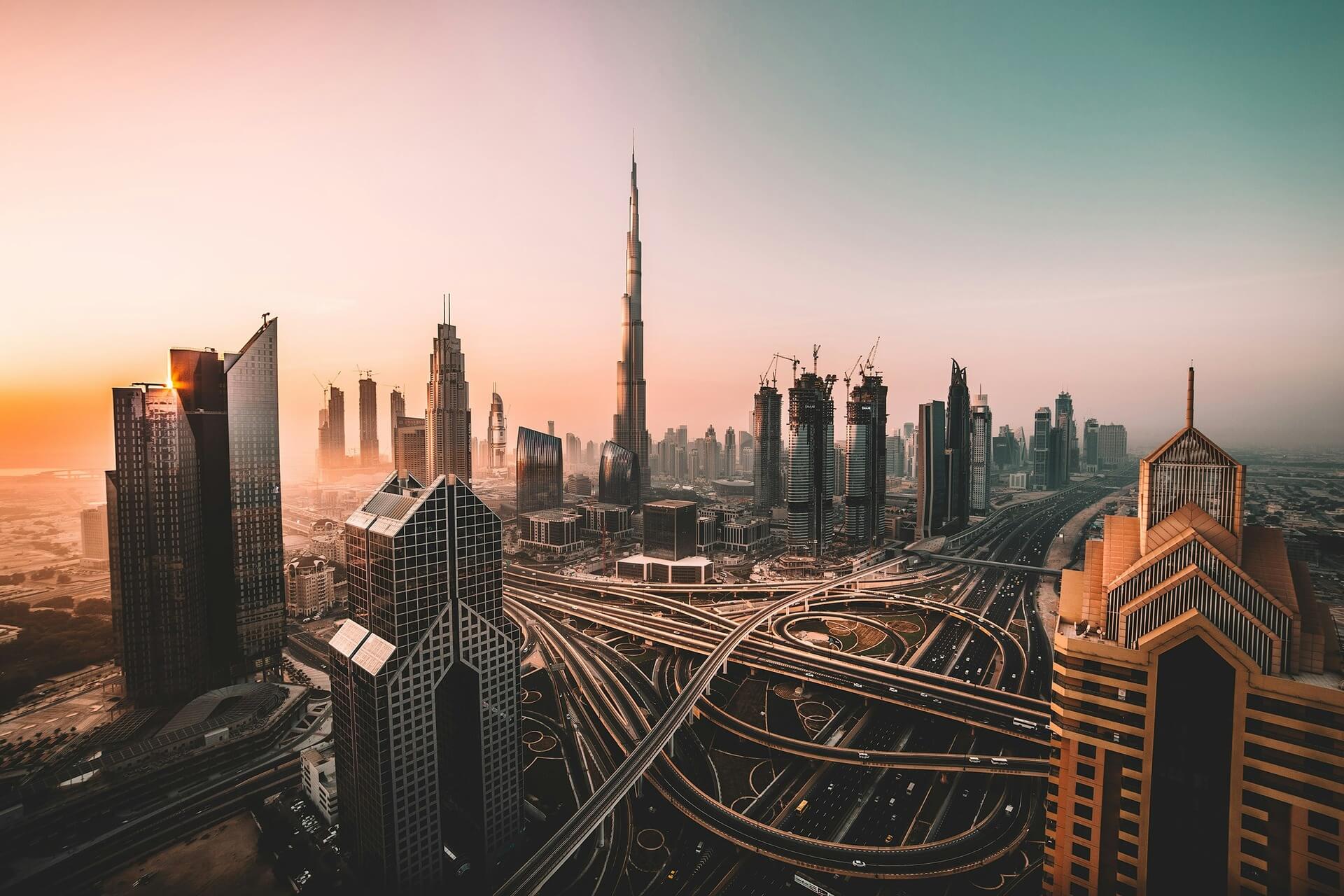
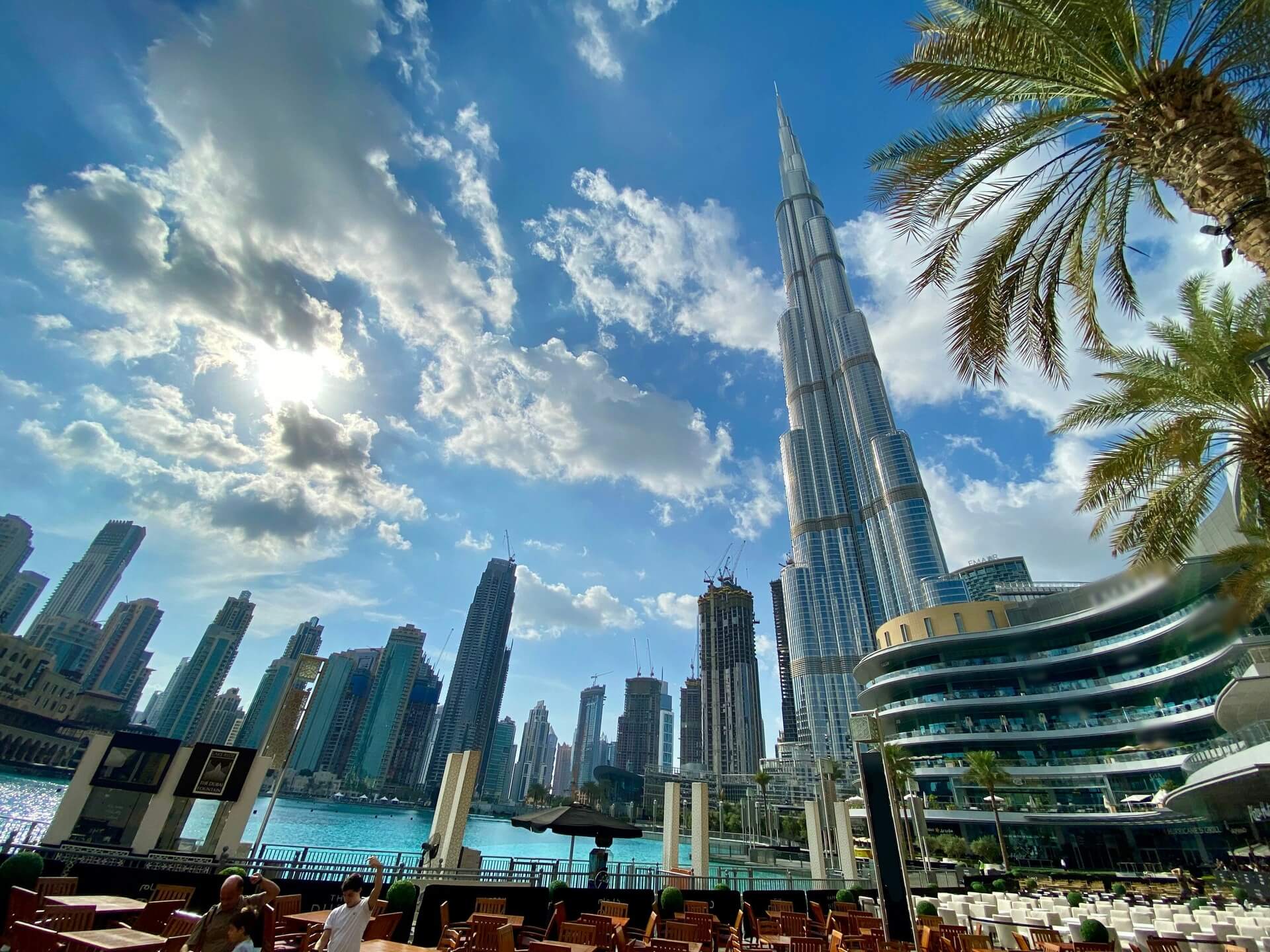
- Downtown Dubai. The center of the action, next to the Burj Khalifa and Dubai Opera, full of high-rises favored by younger tech founders.
- Emirates Hills. Often called the Beverly Hills of Dubai, with large mansions, golf courses, and real privacy for families.
- Dubai Marina. A lively waterfront district with superyachts, fine dining, and sleek apartment towers.
Whether you want a quiet mansion or a home in the clouds, Dubai’s market works at a level of luxury few cities can match.
The Real Cost of Living Well in Dubai
A fair question comes up early: how does the cost of living compare? Dubai is a place where you can spend as much as you choose. You save a great deal on income and capital gains taxes, and the daily luxury lifestyle, while not cheap, often delivers more value than New York or San Francisco. Here is how the two sides tend to line up for a high-earning household.
| What you are comparing | Silicon Valley or New York | Dubai |
|---|---|---|
| Personal income tax | High federal and state | 0% |
| Capital gains tax | Significant | 0% |
| Owning a company as a foreigner | Often complex | 100% in Free Zones |
| Premium real estate per square foot | Very high | Often lower |
| Household staff (nanny, driver) | Expensive | Common and more affordable |
| Top international schooling | Premium | Premium |
| Top-tier healthcare | Expensive | Accessible with private insurance |
Where Your Money Goes Further
- Housing. Ultra-luxury homes cost plenty, but the price per square foot for premium property often sits below Manhattan or Silicon Valley.
- Domestic help. Full-time nannies, drivers, and household staff are common and far more affordable than in the US, which lifts your day-to-day standard of living.
- Healthcare and schooling. Premium healthcare is easy to reach with strong private insurance. Families should budget for top American or British international schools.
For high earners, the tax savings usually outweigh the premium on housing and education, which leaves more room to build real wealth.

The Routes We See Most Often
At Shepherd Movers, our high-net-worth clients tend to leave from a handful of familiar cities.
- San Francisco to Dubai. Tech founders swapping California’s regulations for Silicon Oasis or DMCC.
- New York to Dubai. Wall Street executives and fund managers heading for the DIFC.
- Miami to Dubai. Crypto investors moving from one tax-friendly hub to a more global one.
- Austin to Dubai. E-commerce leaders scaling worldwide from a central time zone.
Wherever your estate sits today, a move of this size calls for real precision. That is where working with experienced international luxury movers stops being a nice-to-have and becomes the difference between a smooth arrival and weeks of delays.
The Shepherd Movers Advantage: Concierge Relocation
Moving a one-bedroom apartment across town is a chore. Moving a luxury estate, a fine art collection, high-end electronics, and exotic cars across the world into a 70-story tower in Dubai is a different kind of project. Shepherd Movers manages the whole move from start to finish, built for clients who need discretion, security, and zero stress. We do not just ship boxes. We handle the parts that trip up ordinary companies.

Why a Skyscraper Move Needs Specialists
Dubai’s residential buildings are heavily regulated. Moving into a modern tower like the Princess Tower or a Burj Khalifa residence comes with rules that catch most movers off guard.
- NOCs and building approvals. Property management requires a No Objection Certificate and a stack of paperwork before a single box comes in. We take care of it.
- Night-time move-ins. To protect the calm of luxury towers, many buildings only allow furniture moves at night, often between 10 PM and 6 AM. Our teams work those hours.
- Freight elevator timing. Service elevators in tall buildings have to be booked to the minute. Miss the window and the move slips by days. We coordinate it precisely.
- Customs for luxury goods. Bringing in art, wine, or high-value electronics takes specialized paperwork to avoid heavy duties or holds at the border. Our brokers manage the whole clearance.
White-Glove Packing From Door to Door
You should not have to lift a finger. Our VIP moving services cover the entire process.
- Full estate packing. Museum-quality crating for artwork, chandeliers, and fragile pieces.
- Disassembly and reassembly. We take apart smart-home tech, gym equipment, and custom furniture, then rebuild it in your new penthouse.
- Unpacking and setup. When you arrive, your clothes are in the closet, your tech is plugged in, and your home is ready to live in.
This is what a proper long-distance moving concierge looks like in practice. One team owns every step, so nothing falls through the cracks between the US pickup and the Dubai handover.
Shipping Your Luxury Car to Dubai
For many clients, leaving a prized car behind is not on the table. Whether you drive a custom G-Wagon, a vintage Porsche, or a Tesla, shipping luxury cars to Dubai is something we handle with care.
- Enclosed container shipping. We do not roll your car onto an open cargo deck. We use enclosed 20ft or 40ft containers that protect it during the ocean crossing.
- UAE import rules. The UAE has specific rules on left-hand-drive vehicles and emissions. We manage the export documents in the US and the import clearance in Dubai.
- Door-to-door delivery. We collect the car from your US garage and deliver it to your Dubai driveway, registered and ready for Sheikh Zayed Road.
Turning the Move Into a Fresh Start
Relocating from the US to Dubai is a serious step for your business, your wealth, and your daily life. A move of this scale deserves a partner who understands what is at stake. You focus on building in the desert, and Shepherd Movers handles the logistics, from securing your assets in the US to managing complex high-rise deliveries in the UAE.
FAQ
Do I need a visa before I move my belongings?
Yes. To clear your household goods through UAE customs as a tax-free personal import, you generally need your UAE residence visa stamped in your passport. Many clients use the UAE Golden Visa, a 10-year residency for investors and entrepreneurs. We time your shipment to line up with your visa approval.
How long does shipping take from the US to Dubai?
Sea freight usually runs 4 to 8 weeks, depending on whether you leave from an East Coast or West Coast port. For items you need right away, we can arrange air freight on select goods, which takes about 5 to 10 days.
Are there things I cannot bring into Dubai?
Yes. The UAE has strict customs laws. Satellite receivers, certain smart-home security cameras without prior approval, gambling devices, and specific medications are restricted or banned. We provide a full “do not pack” list well before moving day.
Can I bring my pets?
Yes. Dubai is increasingly pet-friendly. Pet relocation requires microchipping, rabies vaccinations, and import permits from the UAE Ministry of Climate Change and Environment. We work with specialized pet-relocation partners so your animals travel safely and comfortably.
How much does a VIP move to Dubai cost?
It depends on the size of your estate, your origin city, whether you ship vehicles, and the level of service you want on arrival. Since every high-net-worth move is different, we prepare a custom quote after a virtual or in-person assessment.
Will my American electronics work in Dubai?
The UAE runs on 230V at 50Hz with the British-style three-pin plug (Type G). Most modern electronics like laptops and chargers are dual-voltage. Larger appliances may need step-down transformers or are better left behind. We can review your electronics during packing.